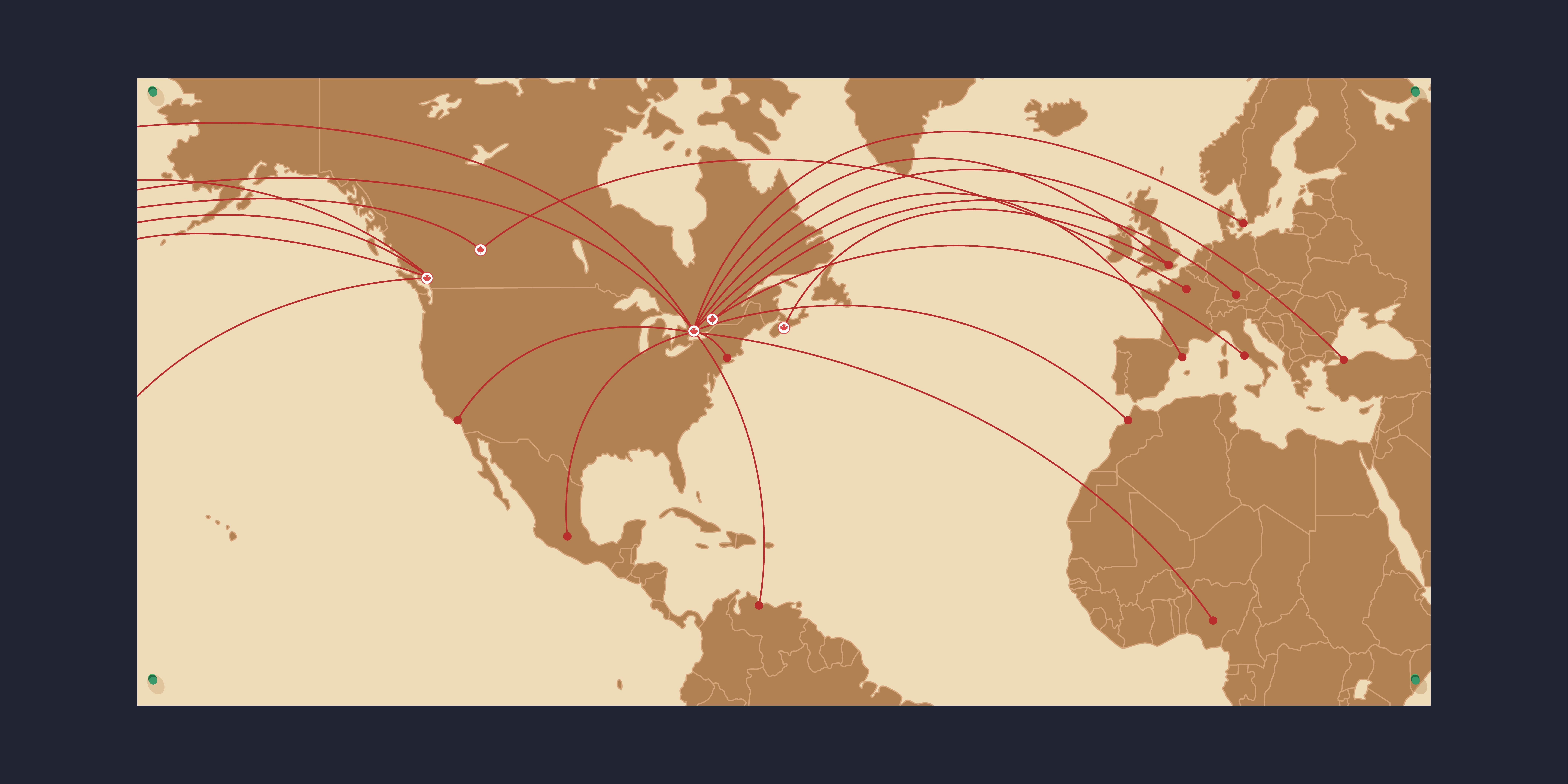

The Foreign Property Rule (FPR) was introduced by the Canadian government in 1971 to encourage Canadians to keep their retirement savings invested at home. The rule initially placed a 10 per cent limit on the proportion of foreign assets that could be held in tax-deferred accounts such as Registered Pension Plans (RPPs) and Deferred Profit Sharing Plans (DPSPs).
Goals of FPR
The goal was simple: If the government was providing generous tax advantages for retirement savings, that capital should help fund Canadian businesses, government debt and domestic economic growth, not flow abroad.
It was designed to strengthen Canada’s financial independence, reduce reliance on the United States, and limit foreign takeovers of key domestic industries. In many ways, it mirrored Canadian content requirements in radio and television, protecting domestic industries by keeping capital and investment within national borders.
That limit doubled in 1990, amid globalization and investor pressure – and moved up to 25 per cent in 1994 and 30 per cent in 2001.
Limitations
While the FPR successfully directed large pools of capital into Canadian markets, it also created limitations.
Pension funds argued that limiting foreign exposure increased portfolio risk and reduced long-term returns, especially as global investment opportunities became more attractive.
Institutional investors and wealthy individuals often found ways around the rule through synthetic foreign exposure and derivatives, allowing them to gain international exposure without technically violating the cap, but average retail investors were largely restricted to the limit.
Removal of FPR
In 2005, the FPR was eliminated, allowing Canadians to invest 100 per cent of their retirement savings internationally. This marked a major structural turning point: Canadian capital shifted from being domestically anchored to globally allocated.
While removing the FPR improved diversification and allowed stronger long-term returns for some investors, it also contributed to a broader decapitalization of Canadian markets.
As more capital flowed outward, fewer domestic companies had access to long-term investment, contributing to fewer large-scale Canadian corporate champions, and a shrinking domestic equity market.
This marked a major shift from a system designed to build Canadian investment to one focused primarily on global returns.