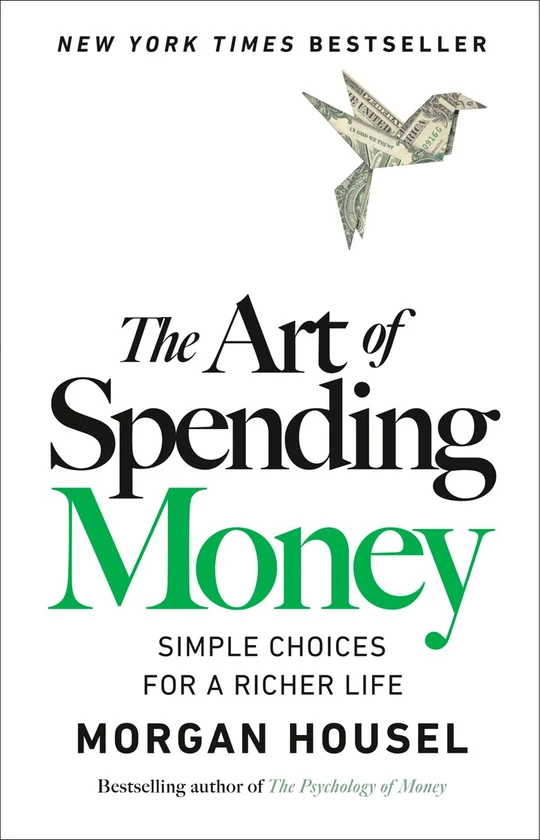
Many financial books focus on strict investing and budgeting strategies to maximize wealth. The Art of Spending Money by Morgan Housel defies this convention by suggesting that the purpose of money is not always to make more of it, but to spend it in a way that optimizes one’s happiness and freedom.
Housel argues that life is not an Excel spreadsheet, and one should not treat one’s finances as such.
Instead of providing a step-by-step guide around how to spend money, the book dissects the psychological aspect of dealing with money. Housel emphasizes the difference between wants and needs as he writes: “A good life is everything you need and some of what you want. If you have everything you want, you appreciate none of what you have.”
The Art of Spending Money explains how many people struggle to differentiate their wants from their needs, all while underappreciating what they have.
When people have easy access to their needs, those needs lose value, just like those with running water often take it for granted. When the value of needs is not recognized, the wants are what seem to give people happiness.
Unfortunately, that happiness always fades, needing to be replaced by buying another want. This endless cycle wastes a significant amount of money chasing infinite wants, as opposed to appreciating finite needs.
“The most powerful definition of wealth is not what you have,” he writes. “What matters is the gap between what you have and what you want.”
Housel creates a new perspective in the minds of readers by defining savings not as money that has not been spent, but as money used to buy some kind of freedom.
For example, money sitting in a savings account is not unspent money, instead it can be many things, including money spent to survive unexpected emergencies like losing your job.
The Art of Spending Money also puts a heavy emphasis on being yourself. It’s very easy for people to spend money for others’ approval, thinking that will make them happy. The book takes a deep dive into discovering oneself and what truly makes each individual happy.
Housel stresses the importance of finding a balance between saving money and spending money on things that truly make you happy.
He also suggests people shouldn’t hesitate to cut what does not make them happy from their lives.
“There is only one success – to be able to spend your life in your own way,” he says.
“You should spend extravagantly on the things you love as long as you mercilessly cut the things you don’t.”
I enjoyed this book because instead of giving hard facts and rigid money-spending advice, it looked at finances from a psychological point of view, emphasizing that every human is different and therefore finds happiness in different things. It shows that regardless of your financial status, your spending habits can be adjusted to truly optimize your happiness.
Each chapter reads like a short story that teaches a lesson, and uses real stories to portray various messages. I would have liked it if Housel tied his chapters together a little more, referring to lessons from earlier chapters to emphasize the connections.
Overall, the book provides a great outlook on finances using a psychological lens, making it easy for beginners in finance to understand.
I would definitely recommend this book to others, regardless of their financial understanding, because it challenges many conventional spending and saving practices while providing a refreshing perspective on the role money plays in everyday life.