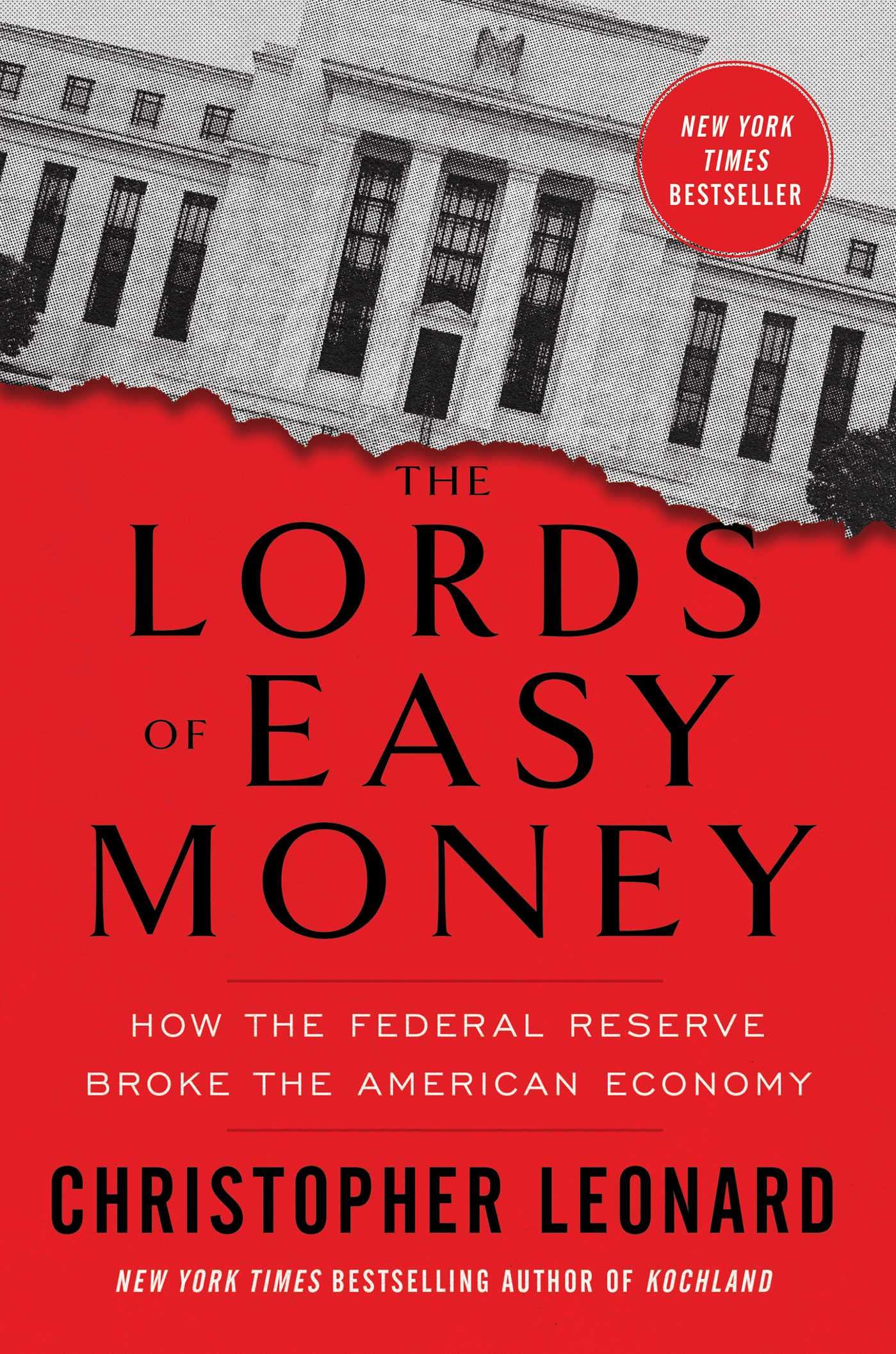
The Lords of Easy Money: How the Federal Reserve Broke the American Economy by Christopher Leonard explores Quantitative Easing (QE) in great detail. It centers around Tom Hoenig, the former President of the Federal Reserve Bank of Kansas City, who is best known for dissenting and expressing his opposition to QE following the 2008 financial crisis, and to a lesser extent Jerome Powell, who initially expressed concerns around QE but ended up voting in favor.
The book speaks about the effects of quantitative easing and a zero-interest rate policy, and the main takeaway was the rather unequal distribution of wealth that resulted from it. With both the 2008 financial crisis and COVID, it seemed that the policies of the Fed directly helped asset owners while the middle class waited for the effects of these policies to pass through the economy.
Bernanke’s response to that anecdote was: “President Fisher, I know we put a lot of value on the anecdotal reports around this table, and often to great credit. But I do want to urge you not to overweight the macroeconomic opinions of the private-sector people who are not trained in economics.” This really highlights the tension between academia and the empirical world, even within the Fed.
Until really this book I didn’t fully appreciate the political element of the Federal Reserve. I had not realized the importance and messaging that a dissent had during an FOMC meeting.
Hoenig knew that his opposition would not truly matter within the Fed, but it did send a message to the rest of the market that the Federal Reserve was not united in its view of the economy and that even the most respected economists did not all agree on the best path forward.
This was further made clear when Jerome Powell and two other Fed members were initially skeptical of QE, and Bernanke had to lobby each individual so as not to send a message to the rest of the market there was division within the FOMC.
Overall, I found a lot of the pre-2000 era difficult to follow, since I was unfamiliar with the Fed governors and crises during that period. It was precisely that era that was pivotal in Hoenig’s philosophy, and I felt that I missed much of the impact. On the other hand, the post-2000 era was far easier for me to follow, since I was more familiar with the 2008 financial crisis and could attach a face to the name Jerome Powell while reading.
I would recommend this book to those with a foundation in economics and fixed income. Although the book does well to introduce concepts like the “repo market” or a “CLO,” it relies heavily on financial jargon that might be difficult to follow, even if these concepts are introduced properly.